

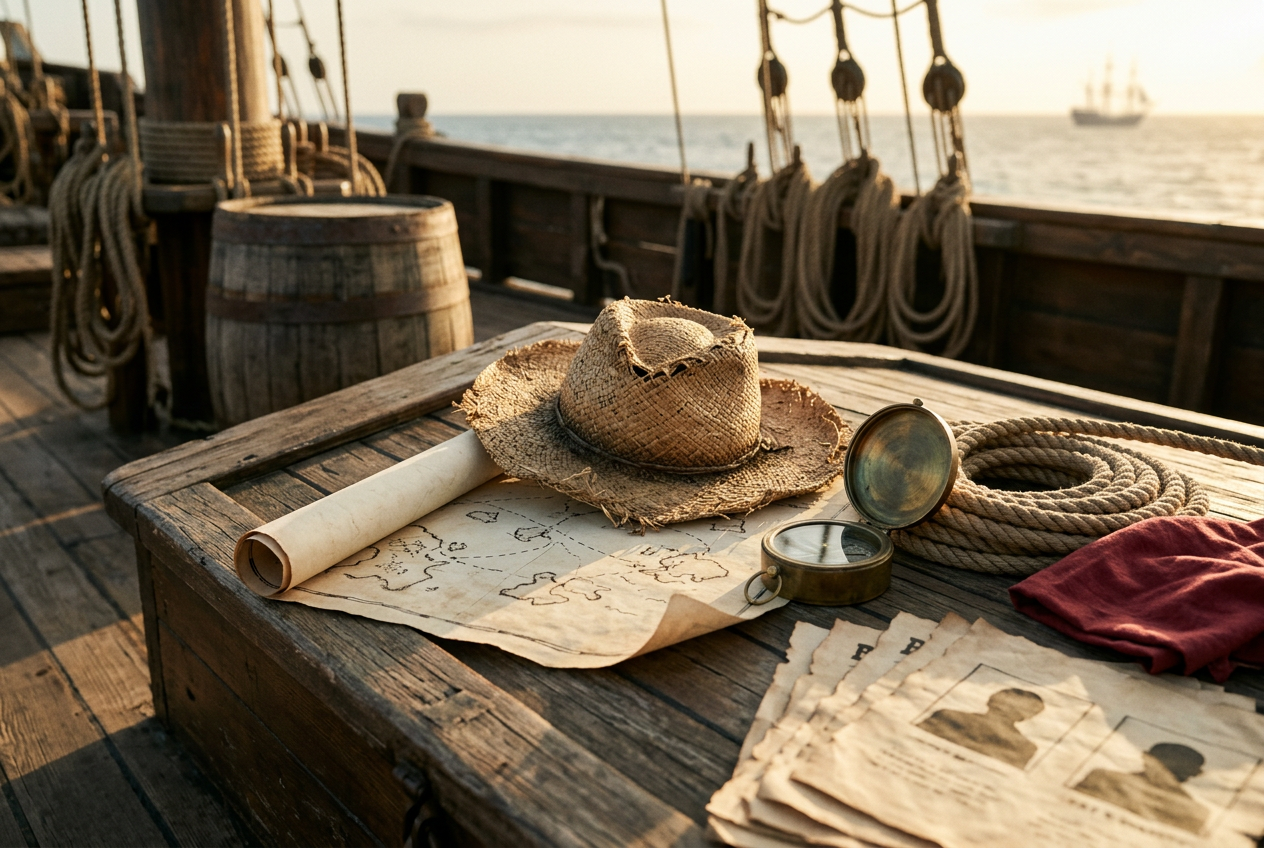
Some fandoms rally around one shared experience. One Piece fans often connect to different characters, arcs and eras of the same story.
*
That difference matters. It helps explain why One Piece has become one of pop culture’s most durable collector fandoms, and why it feels so different from the usual cycle of hype, merch and burnout.
*
People do not simply watch Monkey D. Luffy and the Straw Hats, nod along and move on. They pick sides. They defend arcs. They obsess over character eras. They get attached to a look, a crew, a symbol, a transformation or a moment that hit them at exactly the right time.
*
For one fan, One Piece is the emotional wreckage of Marineford. For another, it is the cool of Zoro, the sadness around Law, the chaos of Buggy or the sheer visual swagger of Wano. The franchise is huge, but the attachment rarely feels vague. Fans are not connecting to a generic brand. They are connecting to specific corners of an enormous world.
That is what makes One Piece such a natural fit for collector culture.
*
The impulse does not come only from the series being popular. It comes from how richly the story is built, and from how many different ways there are to love it.
*
Not every One Piece fan collects for the same reason.
*
What makes One Piece unusually strong in this space is the sheer number of collecting paths it creates. Some fans are drawn to the original Straw Hats. Others gravitate toward a single saga, a favourite villain or one character whose design never really leaves them. That gives the fandom more variety than the usual franchise built around one or two obvious centrepieces.
*

*
It also means collections can look completely different from one fan to the next. Someone whose heart still belongs to Alabasta is not necessarily interested in the same pieces as someone obsessed with Dressrosa, Whole Cake Island or Wano. One shelf might celebrate the core crew. Another might revolve around Law, the Yonko, the Admirals or even the iconography of wanted posters and pirate flags.
*
That flexibility matters because it keeps One Piece from feeling locked into one standard collector narrative. Fans are not all chasing the same symbol of the franchise. They are choosing the corner of the world that feels most like theirs.
*
A world designed to be remembered.
*
Collector fandoms usually need one thing above all: a visual identity that sticks. One Piece has that in ridiculous abundance.
*
The straw hat alone is one of the clearest symbols in modern anime, but the series does not stop there. Distinct silhouettes, dramatic poses, scarred faces, swords, coats, hats, uniforms, masks, powers and transformations all help make the world instantly recognisable. Even people who are not deeply invested can usually identify a One Piece character on sight.
*
That kind of clarity matters. Collectibles work best when they immediately evoke a world, and One Piece has spent years building a visual vocabulary that fans can recognise in seconds. Luffy’s grin and stance, Chopper’s shape, Zoro’s swords, Law’s hat, Ace’s silhouette, Doflamingo’s coat, Gear Five’s energy — none of it feels interchangeable. The designs are loud in the best possible way. They carry memory with them.
*
The series also benefits from constant reinvention. Characters evolve, wardrobes change, power levels shift and whole arcs introduce new aesthetics, but the core identity stays intact. That gives fans something more interesting than a single “definitive” version of a character. In One Piece, the same fan can be attached to more than one era at once.
*

*
The live-action made the map bigger.
*
The Netflix adaptation helped expand the audience, but it did not flatten the series into something safer or more generic. That is a big reason it worked. Newcomers were given a more approachable entry point, while longtime fans were still pointed back toward the anime, the manga and the sprawling history that made the franchise matter in the first place.
*
That kind of expansion is valuable because One Piece rewards deeper curiosity. People may arrive through a mainstream format, but they rarely stay at the surface. They start with a few characters, then a favourite. Then a saga. Then a debate. Then a rabbit hole.
*
That journey matters for collector culture because attachment gets more specific as fans go deeper. They do not just end up liking One Piece in the abstract. They end up caring about particular versions of characters, particular emotional peaks and particular aesthetics. The further they travel into the series, the more there is to recognise as their own.
5D POP CULTURE LINKS
5D YouTube Channel
Check out our YouTube Channel at https://youtube.com/@5dpopcultureyoutube829?si=wGwmgWKx8fIaT3Os Here there are interviews, reviews, opinion pieces and all sorts of goodies from the pop culture world!
*
Subscribing to the 5D Pop Culture Website
If you would like to subscribe (for free) to the 5D Pop Culture Website and keep up to date with our content then just go to the bottom of the home page, submit your email & click subscribe!
*
5D Reviews
If you are a content creator and interested in having your work reviewed here on the 5D Pop Culture Website then contact us at 5DPopCulture@gmail.com
*
Ko-fee
If you would like to donate to help this website & also gain access to extra content, you can support us here: https://ko-fi.com/5dpopculturewebsite